Five Roulette Tips That Do Not Rely on Betting Myths
Roulette systems cannot predict a spin. These five rules-first tips cover wheel selection, payouts, betting progressions, layout accuracy, and spending limits.
 Casino Context
Updated July 24, 2026
Casino Context
Updated July 24, 2026
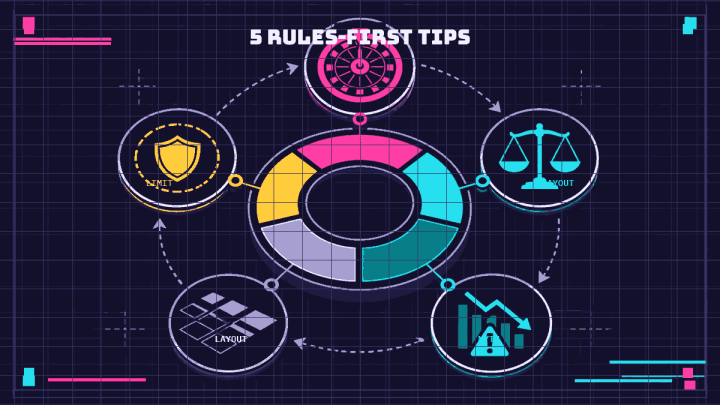
Roulette strategy cannot predict the next number or remove the house edge. The useful choices are selecting the wheel, understanding each wager, keeping the stake constant, and limiting the number of spins. Five rules-first tips can reduce avoidable cost and confusion without pretending that a betting system changes random outcomes.
Bottom line
Prefer fewer zero pockets, know the exact payout, ignore streak systems, place only intentional bets, and set a loss and time limit before the wheel starts.
1. Check how many zero pockets the wheel has
A single-zero wheel has 37 pockets: 1-36 plus 0. A double-zero wheel has 38 because it adds 00. A triple-zero wheel has 39 because it adds a third zero-marked pocket. The extra zero pockets increase the casino advantage when standard payouts stay the same.
| Wheel | Winning pockets | Losing pockets | Calculated house edge |
|---|---|---|---|
| Single zero | 18 | 19 | 1 ÷ 37 = 2.70% |
| Double zero | 18 | 20 | 2 ÷ 38 = 5.26% |
| Triple zero | 18 | 21 | 3 ÷ 39 = 7.69% |
The calculation assumes a standard 1-to-1 payout and no special rule. A single-zero wheel is therefore the lower-edge choice among those three conventional layouts. Also check whether the table offers la partage or en prison for even-money bets, because the posted rule can change the treatment of a zero result.
2. Match the payout to the number of covered pockets
Inside bets cover individual numbers or small groups. Outside bets cover larger groups such as colors, odd or even, high or low, dozens, and columns. Covering fewer pockets wins less often and pays more when it wins; covering more pockets wins more often and pays less.
On a standard layout, a straight-up number pays 35 to 1, a two-number split 17 to 1, a three-number street 11 to 1, a four-number corner 8 to 1, and a six-number line 5 to 1. Dozens and columns pay 2 to 1, while red/black, odd/even, and high/low pay 1 to 1. Verify the table because variants and special bets can use different layouts or paytables.
A chip placed inside one numbered square covers that number only.
A chip placed on the shared line between two numbers covers both.
A chip placed at the outside edge of one row covers its three numbers.
A chip at the intersection of four number squares covers all four.
A chip on the outside junction between two rows covers six numbers.
Printed boxes beyond the number grid cover larger defined groups.
3. Do not mistake a betting progression for an edge
Martingale and similar systems change the size of the next wager after a result. They do not change the wheel’s pocket probabilities. A progression beginning at $5 becomes $5, $10, $20, $40, $80, and $160 after five consecutive losses, putting $315 at risk before the next bet.
Table limits and a finite bankroll prevent indefinite doubling. A small number of apparently successful sequences can be erased by one long losing run. Positive progressions have the same core problem: stake timing does not predict the next spin.
4. Use the layout deliberately
Place each chip only after identifying the wager name, covered numbers, payout, and total stake. A chip on a line intersection can represent a split, street, corner, or six-line bet depending on its exact position. On a live table, the dealer’s announcement closes betting; late chips can be rejected.
Online interfaces may offer repeat, double, racetrack, neighbor, or saved-bet controls. Review the displayed total before confirming. A repeat button can reproduce every wager from the previous spin, not just the one you remember.
5. Plan total exposure, not a win target
Set a maximum loss and a time or spin limit. If the budget is $50 and the plan is 25 spins, a constant $2 total stake funds the full sequence if every wager loses. A $10 total stake funds only five losing spins. Wins can extend play, but repeated recycling also increases the total amount wagered.
- Do not raise the limit because a color or number feels due.
- Do not borrow or use money reserved for expenses.
- Count every chip on the layout in the total stake.
- Skip side bets whose coverage or payout you cannot verify.
- Stop when the money or time limit is reached.
What roulette history does not tell you
Previous results describe the past. On a fair wheel, a run of red does not make black more likely on the next spin, and a number that has not appeared is not due. A results board can help confirm completed outcomes; it is not a forecasting tool.
A visibly biased or faulty physical wheel is an equipment-integrity issue for the operator and regulator, not a practical player strategy. Do not assume ordinary random clusters reveal a defect.