What Is a Hold and Win Slot?
Hold and Win bonuses lock qualifying symbols while the other positions respin. Learn the usual sequence, important variations, payout rules, and what to check in each game.
 Casino Context
Updated July 24, 2026
Casino Context
Updated July 24, 2026
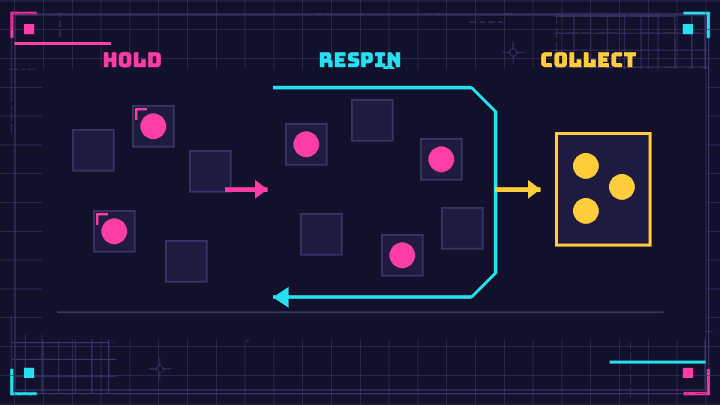
A Hold and Win slot uses a bonus round in which selected symbols remain locked while the other positions respin. New qualifying symbols usually lock into place and refresh the remaining-spin counter. The round ends when no respins remain or the grid is filled, and the game then awards the collected values and any jackpots specified by its paytable.
Key point
Hold and Win describes a family of mechanics, not one universal rule set. Trigger counts, respins, grids, symbol values, and jackpot conditions differ by game.
How a typical Hold and Win round works
- Qualifying symbols landA stated number of cash, coin, orb, or other feature symbols triggers the round.
- Trigger symbols lockThe qualifying symbols remain in their positions while empty positions stay available.
- Respins beginThe game awards the number of respins shown in its rules, commonly three.
- New symbols refresh the counterEach new qualifying symbol normally locks and resets or adds to the counter as the rules specify.
- The round settlesWhen the counter reaches zero or the grid fills, the game totals the applicable values and awards.
Pragmatic Play’s official description of Pirate Gold Deluxe provides a clear example: eight treasure-bag symbols trigger its re-spin bonus, the bags remain on the 4×5 grid, three respins begin, and a successful spin resets the counter. Filling all 20 positions awards the game’s stated Grand Jackpot. Those figures belong to that title; they are not defaults for every Hold and Win slot.
Hold and Win, Lock and Respin, and similar names
Providers use several labels for related mechanics, including Hold and Win, Hold and Spin, Lock and Respin, and Link-style bonuses. The common idea is persistent symbols plus repeated attempts to fill remaining positions. The details can be materially different.
IGT’s Prosperity Link, for example, describes a Lock and Respin Bonus triggered by six golden orbs. Its round can unlock additional reel sets as more orbs are collected. A player should therefore read the title’s own information screen instead of relying on the feature name alone.
Common variations
| Rule element | Possible implementations | What to check |
|---|---|---|
| Trigger | A minimum number of feature symbols, a random trigger, or a separate bonus purchase where permitted. | Required symbol count and eligible base-game bets. |
| Starting respins | Three is common, but some games begin with a different count. | Whether a new symbol resets, adds, or does not change the counter. |
| Grid | A fixed reel grid, expanding positions, multiple reel sets, or unlockable rows. | How positions open and whether a full grid has a special award. |
| Symbol awards | Credit values, bet multipliers, collectors, modifiers, or named jackpots. | Whether displayed numbers are currency, credits, or multiples of stake. |
| Jackpots | Fixed jackpots, progressives, random jackpot symbols, or a fill-the-grid award. | Eligibility, qualifying stake, contribution, and trigger rules. |
How the final prize is calculated
The simplest version adds the values shown on all collected symbols. Other games apply multipliers, collect symbols, upgrades, or jackpot awards. A number printed on a coin might represent credits or a multiple of the selected bet rather than a fixed cash amount.
The paytable should explain how the award scales with stake and whether changing denomination changes jackpot eligibility. Under the UK Gambling Commission’s RTS 3, licensed remote games must make rules, winning determination, and prize information available before a customer commits to gamble.
Does Hold and Win improve the odds?
The feature can concentrate a large part of a game’s prize potential into a visually progressive round, but it does not create a player strategy for changing random outcomes. The trigger, symbol placements, and modifiers in an RNG title follow the game mathematics. Holding a symbol is an automatic rule of the feature, not a decision that lets the player choose a better outcome.
Compare the exact RTP and volatility rather than assuming every Hold and Win game is high volatility. Providers can allocate return differently between the base game and bonus features, and a title may be offered in multiple approved RTP configurations.
Worked example
Imagine a 5×3 game whose rules trigger the feature with six coin symbols and award three respins. The six trigger coins lock. The first respin lands one new coin, so seven positions are occupied and the counter returns to three. Two blank respins reduce the counter to one. A final new coin resets it again. If three later respins add nothing, the round ends with eight collected coins.
The payout is not knowable from the coin count alone. The rules might add eight printed values, apply a collector, or award a jackpot for a specific symbol. Filling all 15 positions might have a separate award - or no separate award at all. This is why the game-specific paytable is essential.
Before playing
- Confirm the exact trigger count and which symbols qualify.
- Check the starting respins and what refreshes the counter.
- Read how coin values, credits, multipliers, and jackpots are calculated.
- Verify the selected stake and any jackpot-eligibility requirement.
- Check the RTP for the version on your screen.
- Set a spending limit before play; a nearly full grid does not make the next symbol due.